
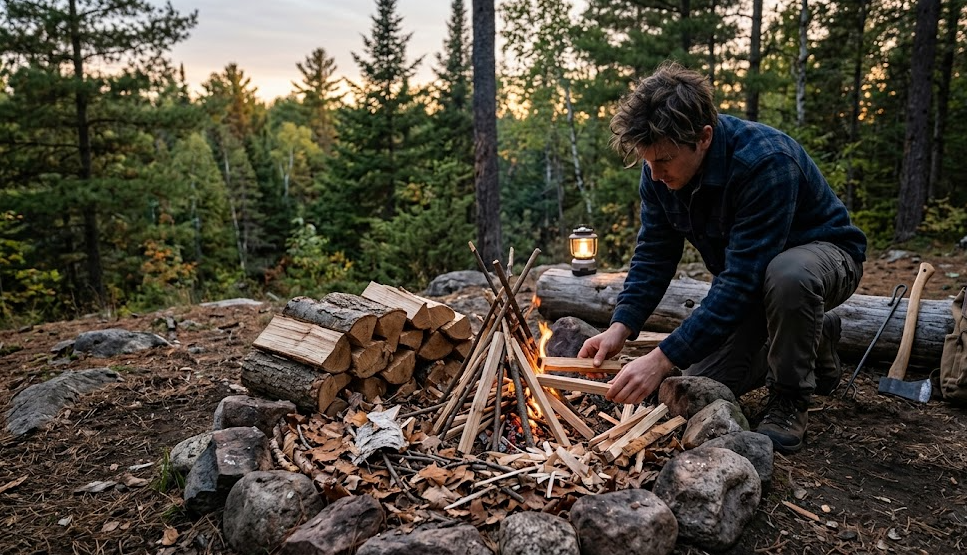
Choosing the right location is the first and most important step in learning how to build a campfire safely. A good campfire spot should be away from dry grass, hanging branches, bushes, tents, and anything that can catch fire easily. Most campsites provide designated fire rings or fire pits, and using these approved areas is always the safest option. If no fire ring is available, you should select flat ground with clear open space around it. Wind direction also matters because strong wind can spread sparks quickly and create dangerous situations. A safe location helps control the fire better and reduces the risk of wildfires.
Quick Fire Material Table
| Material Type | Purpose | Examples |
|---|---|---|
| Tinder | Starts the fire quickly | Dry leaves, paper, pine needles |
| Kindling | Helps spread flames | Small sticks, twigs |
| Firewood | Keeps the fire burning | Large dry logs |
Gathering the Right Fire Materials
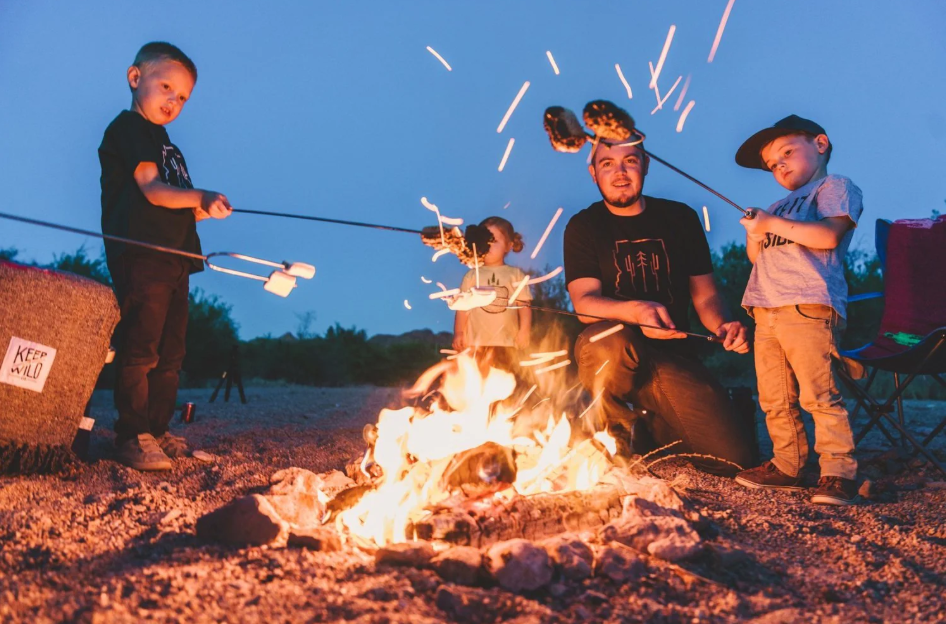
Gathering the right fire materials makes the process of building a campfire much easier and more effective. Every strong campfire needs three main types of fuel: tinder, kindling, and firewood. Tinder includes small, dry materials like leaves, paper, dry grass, pine needles, or bark that catch fire quickly. Kindling consists of small sticks and thin branches that help the flames grow stronger after the tinder starts burning. Firewood includes larger dry logs that keep the fire burning for a longer time and provide steady heat for cooking or warmth.
Using dry wood is extremely important because wet or green wood creates too much smoke and burns very poorly. It is also better to use local firewood instead of bringing wood from another area, as this helps prevent the spread of insects and tree diseases. Keep your wood organized near the fire site but far enough away to stay safe from sparks. When you prepare all materials before lighting the fire, the entire process becomes smoother, safer, and much more enjoyable.
Understanding Different Campfire Structures
Understanding different campfire structures helps you choose the best fire style for your outdoor needs. The most common campfire designs are the teepee, log cabin, and upside-down pyramid. The teepee structure is popular for beginners because it lights quickly and creates strong flames. You place tinder in the center, surround it with small kindling sticks in a cone shape, and leave enough space for airflow. This structure works well for quick warmth and simple cooking tasks.
The log cabin style uses larger sticks stacked like a small square house around the tinder and kindling placed in the center. This design burns slower and provides a more stable fire for longer cooking sessions. The upside-down pyramid starts with large logs at the bottom and smaller sticks on top, allowing the fire to burn downward slowly and evenly. Each structure has its own purpose, and knowing when to use each one improves your skills in how to build a campfire safely and efficiently.
Step-by-Step Guide on How to Build a Campfire
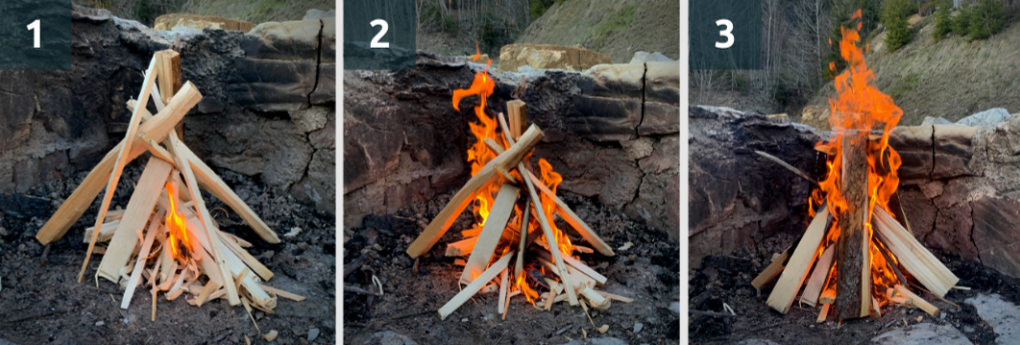
Start by placing your tinder in the center of the fire pit or designated fire ring. Make sure the area around it is clear of dry leaves, grass, and anything that could catch fire quickly. Once the tinder is ready, place small pieces of kindling around it in your chosen structure, such as a teepee or log cabin style. Leave enough space between the sticks so air can flow through easily, because oxygen helps the fire burn stronger and faster.
After arranging the kindling, add larger pieces of firewood around the structure without crushing the smaller materials. Use a match or lighter to carefully light the tinder from more than one side if needed. As the flames grow, slowly add more kindling and then larger logs to maintain a steady fire. Avoid adding too much wood at once because it can smother the flames. A controlled fire burns better, stays safer, and gives you a much more enjoyable camping experience.
Campfire Safety Tips You Should Never Ignore
Campfire safety should always be your top priority whenever you spend time outdoors. Never build a fire during strong winds because flying sparks can easily start nearby fires. Keep your campfire small and controlled instead of making large flames that are harder to manage. Always keep a bucket of water, sand, or a shovel nearby so you can respond quickly if the fire spreads unexpectedly. Children and pets should stay at a safe distance from the fire area at all times.
You should also never leave a campfire unattended, even for a few minutes. Many wildfires start because someone walked away and assumed the fire would stay under control. Avoid burning plastic, cans, or other trash because these materials release harmful smoke and dangerous chemicals. Only burn dry wood and natural materials meant for campfires. Following these simple safety tips makes learning how to build a campfire both enjoyable and responsible.
How to Properly Extinguish a Campfire
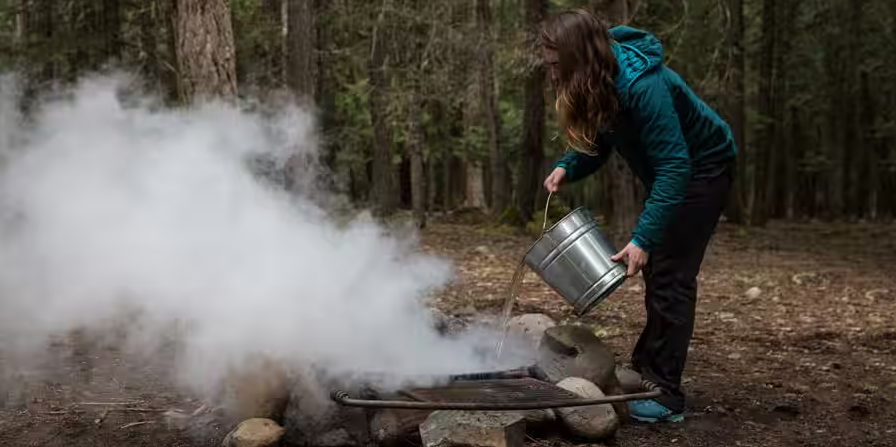
Properly extinguishing a campfire is just as important as building it. When you finish using the fire, stop adding wood and allow the flames to burn down until only glowing embers remain. Slowly pour water over the embers, not all at once, to avoid creating hot steam that can cause burns. Make sure every part of the fire pit gets wet, including the ashes, small coals, and partially burned wood pieces.
After pouring water, use a stick or shovel to stir the ashes and embers so hidden heat can escape. Then pour more water again until everything feels cool to the touch. Never leave a campsite until the fire is completely out because even small hot coals can restart a fire later. Do not cover the fire with dirt alone, because buried embers can continue burning underneath. A fully extinguished campfire protects both nature and everyone around you.
Common Mistakes to Avoid When Building a Campfire
One of the most common mistakes people make while learning how to build a campfire is choosing the wrong location. Many beginners set up fires too close to tents, trees, or dry grass, which increases the risk of accidental spreading. Another frequent error is using wet or green wood, which produces heavy smoke and weak flames instead of a steady fire. Poor preparation often leads to frustration and an unsafe fire that is difficult to control.
Another major mistake is adding too much wood at once. When the fire is overloaded, it gets smothered due to lack of airflow and struggles to stay lit. Some people also ignore fire safety rules by leaving the fire unattended, even for a short time, which can quickly become dangerous. Not fully extinguishing the fire is another serious issue, as leftover embers can reignite later. Avoiding these mistakes ensures a safer and more enjoyable outdoor experience.
Conclusion
Learning how to build a campfire is a valuable outdoor skill that combines preparation, patience, and responsibility. When you choose a safe location, gather the right materials, and use the correct fire structure, you create a fire that is both useful and controlled. A well-built campfire not only provides warmth and light but also enhances the overall camping experience.
Safety should always come first, from the moment you start the fire until you fully extinguish it. Following proper steps helps protect the environment and prevents accidents. With practice, you can confidently build and manage a campfire in different outdoor settings while staying safe and responsible.
FAQs
1. What is the easiest way to start a campfire?
The easiest way is to use dry tinder like paper, leaves, or small twigs and arrange them in a teepee shape so air can flow and help the fire grow quickly.
2. What materials are best for building a campfire?
The best materials include tinder for ignition, kindling for growth, and dry firewood for long-lasting heat and steady burning.
3. Why does my campfire keep going out?
A campfire usually goes out because the wood is wet, there is not enough airflow, or too much fuel is added too quickly, which blocks oxygen.
4. How long does it take to fully extinguish a campfire?
It can take several minutes to fully extinguish a campfire, depending on its size. You must keep adding water and stirring until everything feels completely cool.
For More Visit Accurate Unit Convert











Leave a Reply