
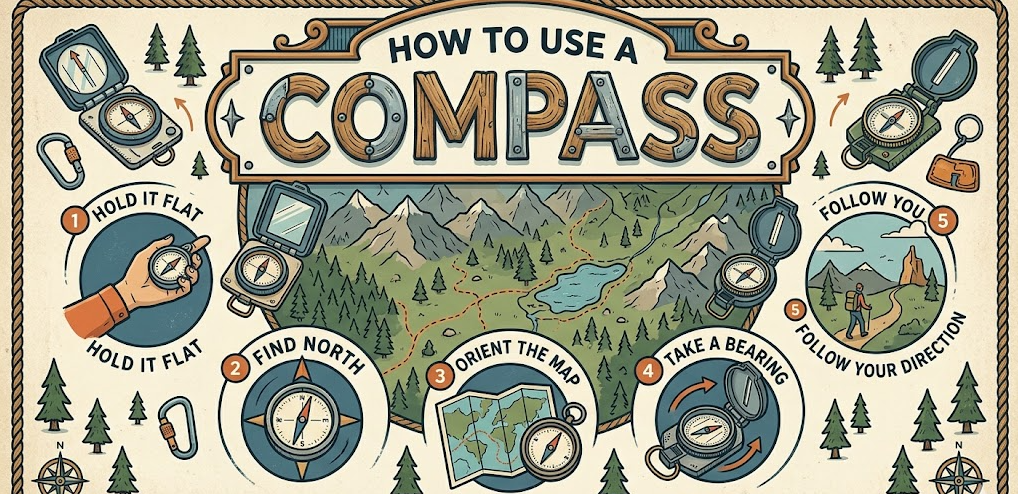
Learning how to use a compass is one of the most valuable outdoor skills you can develop. Whether you’re hiking in the wilderness, teaching kids basic navigation, or simply curious about how direction-finding works, understanding a compass can boost your confidence and safety in unfamiliar environments.
In today’s world of GPS and smartphones, compass skills may seem outdated—but they are far from obsolete. Batteries die, signals drop, and technology can fail. A compass, however, is reliable, simple, and always ready when you need it.
This comprehensive guide will walk you through how to use a compass step by step, explain how to use a compass without a map, explore how it works in games like Minecraft, and provide beginner-friendly tips to master navigation like a pro.
What Is a Compass and How Does It Work?
A compass is a navigation tool that shows direction relative to the Earth’s magnetic poles. It uses a magnetized needle that aligns itself with the Earth’s magnetic field, always pointing toward magnetic north.
Understanding how it works is essential before learning how to use a compass for navigation. The key parts include:
The baseplate, which is the flat surface that holds the compass
The magnetic needle, which rotates freely and points north
The rotating bezel or housing, which helps you set directions
The direction-of-travel arrow, which shows where you’re heading
The concept is simple, but mastering its use requires practice and attention to detail.
How to Use a Compass for Beginners
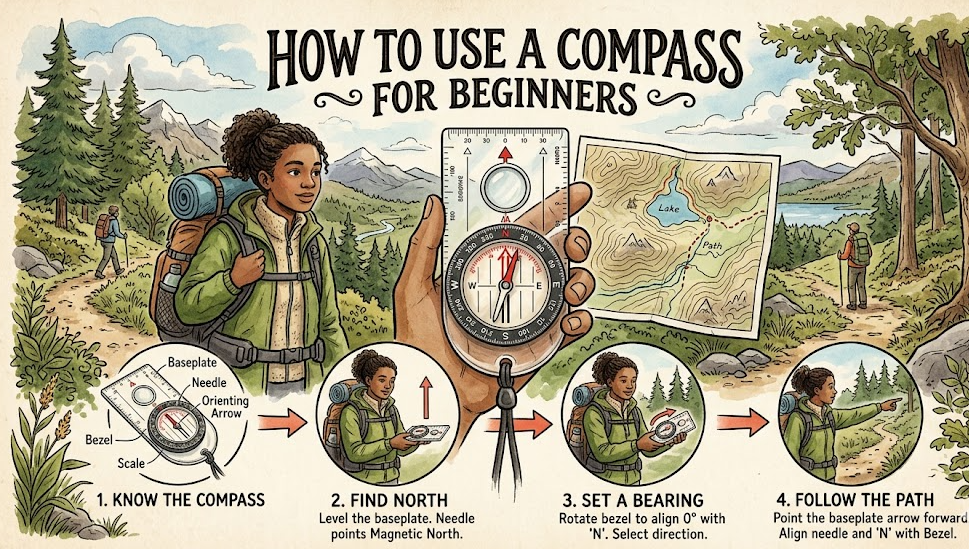
If you’re new to navigation, learning how to use a compass for beginners starts with understanding basic directions and alignment.
First, hold the compass flat in your hand at waist level. Make sure the direction-of-travel arrow is pointing straight ahead. Next, rotate your body until the red magnetic needle lines up with the orienting arrow inside the compass housing. This is often referred to as “red in the shed.”
Once aligned, the direction-of-travel arrow now points toward your intended direction. This is the foundation of compass navigation.
Beginners should practice this in an open area before moving to more complex environments like forests or mountains.
How to Use a Compass Step by Step
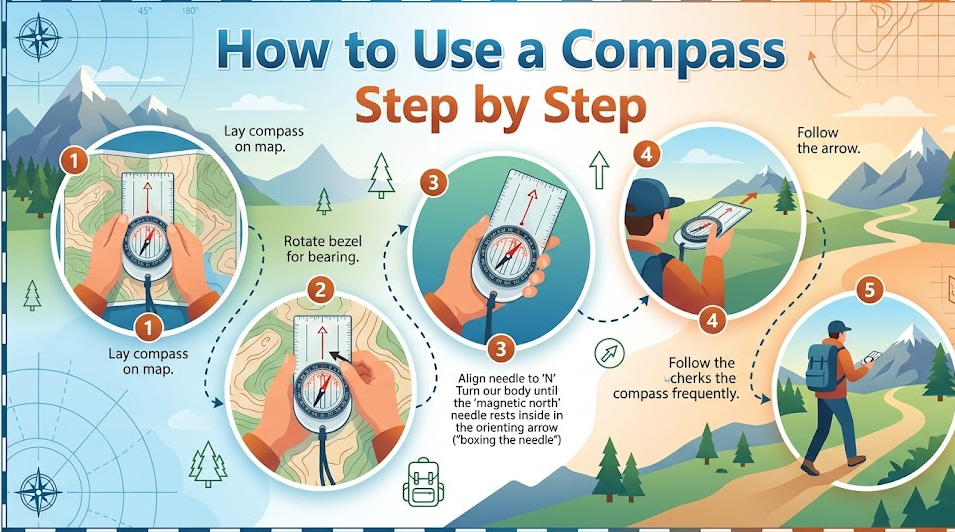
Understanding how to use a compass step by step makes navigation much easier and less intimidating.
Start by identifying your desired direction. If you know the bearing (for example, 90° for east), rotate the compass housing until that degree aligns with the direction-of-travel arrow. Hold the compass steady and turn your body until the needle aligns with the orienting arrow. Now, simply follow the direction-of-travel arrow.
If you’re using landmarks, pick a visible object in that direction and walk toward it. Repeat the process once you reach it. This helps maintain a straight path even in uneven terrain.
Practicing these steps regularly will help build muscle memory and confidence.
Also Read:- How to Cook a Ham in the Oven Perfectly Every Time
How to Use a Compass for Navigation
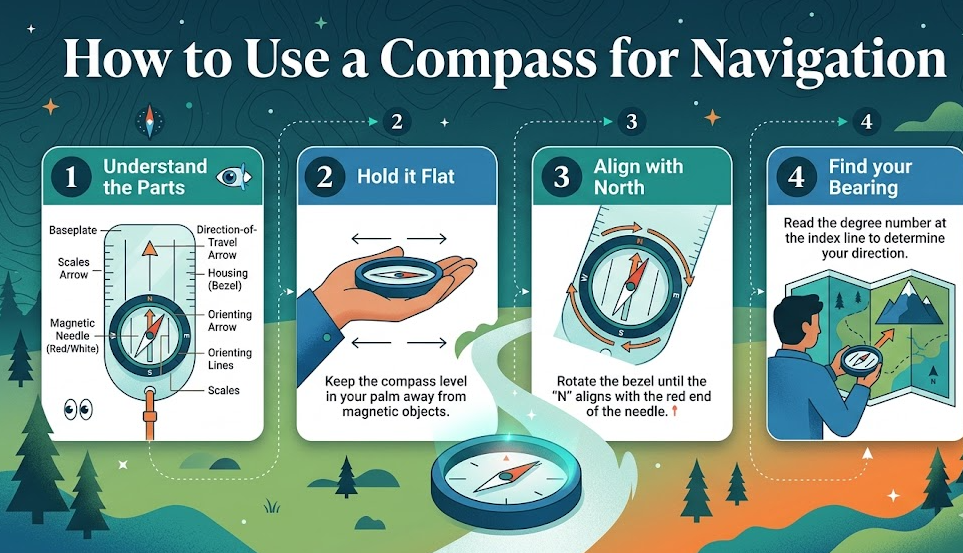
Knowing how to use a compass for navigation is essential for hikers, campers, and survival enthusiasts.
Navigation with a compass involves combining direction with movement. Once you set your bearing, your goal is to maintain that direction consistently. Avoid drifting left or right by checking your compass frequently.
In real-world scenarios, terrain can complicate navigation. Obstacles like rivers or dense forests may require detours. In such cases, you can use a technique called “offset navigation,” where you intentionally adjust your path slightly to ensure you reach a known landmark.
Compass navigation is not just about direction—it’s about awareness, consistency, and adaptation.
How to Use a Compass Without a Map
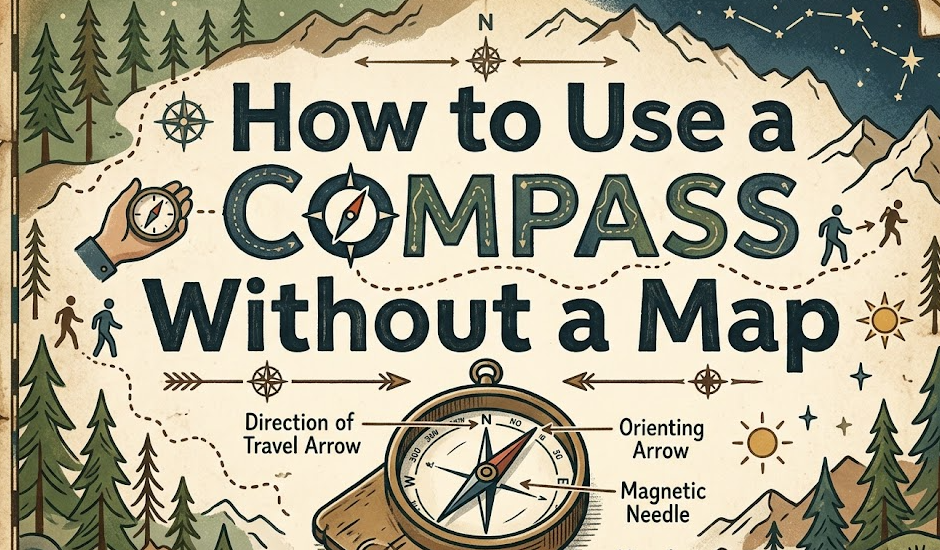
Many people wonder how to use a compass without a map, especially in survival situations.
Even without a map, a compass can help you maintain a consistent direction. For example, if you know that civilization lies to the south, you can use your compass to travel steadily in that direction.
You can also use the sun as a reference. The sun rises in the east and sets in the west, which can help you verify your compass readings. At night, the North Star can serve as a natural guide in the northern hemisphere.
Without a map, your compass becomes a tool for direction rather than precise location. It helps you avoid walking in circles and increases your chances of reaching safety.
How to Use a Compass for Kids
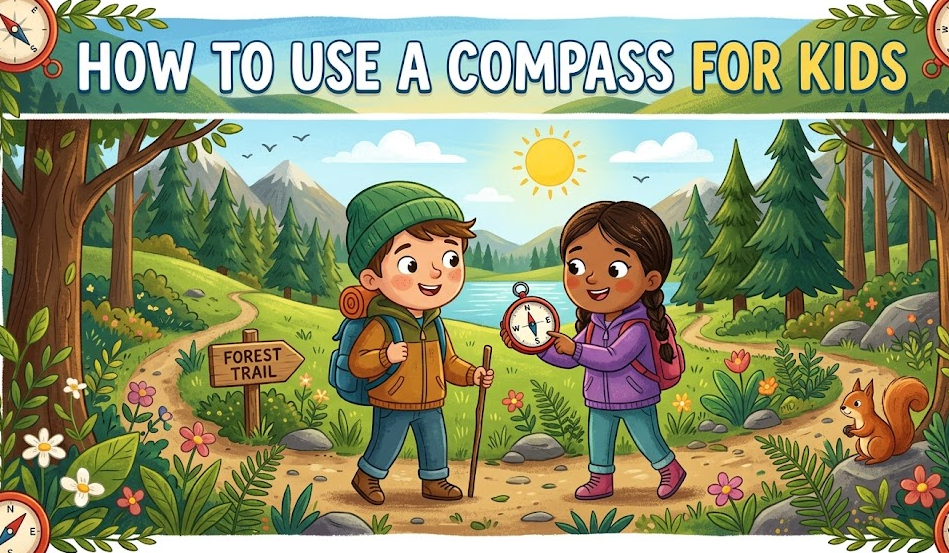
Teaching how to use a compass for kids can be both fun and educational.
Start with simple concepts like north, south, east, and west. Use games to make learning interactive. For example, ask kids to find objects in different directions or create a treasure hunt using compass bearings.
Keep explanations simple and avoid technical jargon. Let them hold the compass, rotate it, and observe how the needle moves. Hands-on learning is the most effective approach.
Introducing compass skills at a young age builds spatial awareness and problem-solving abilities.
How to Use a Compass and Protractor
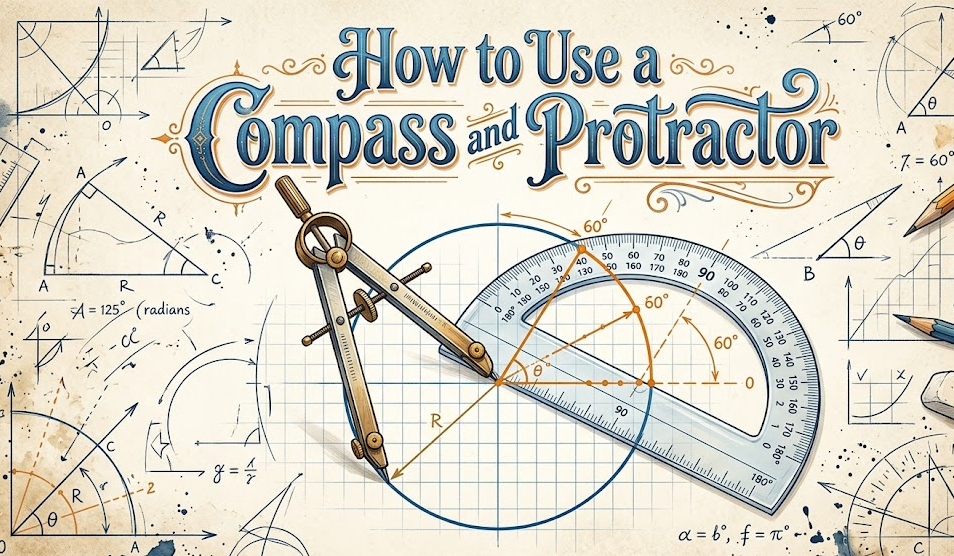
Understanding how to use a compass and protractor is especially useful in academic settings and precise navigation tasks.
A protractor measures angles, while a compass helps you follow those angles in the real world. For example, if a map shows a route at a 60° angle, you can use a protractor to measure that angle on the map and then set your compass to follow it.
This combination is commonly used in geometry, engineering, and advanced navigation.
Practicing with both tools enhances your ability to interpret maps and follow accurate routes.
Also Read:- How to Set Up Voicemail on Any Phone (Easy Guide)
How to Use a Compass in Minecraft
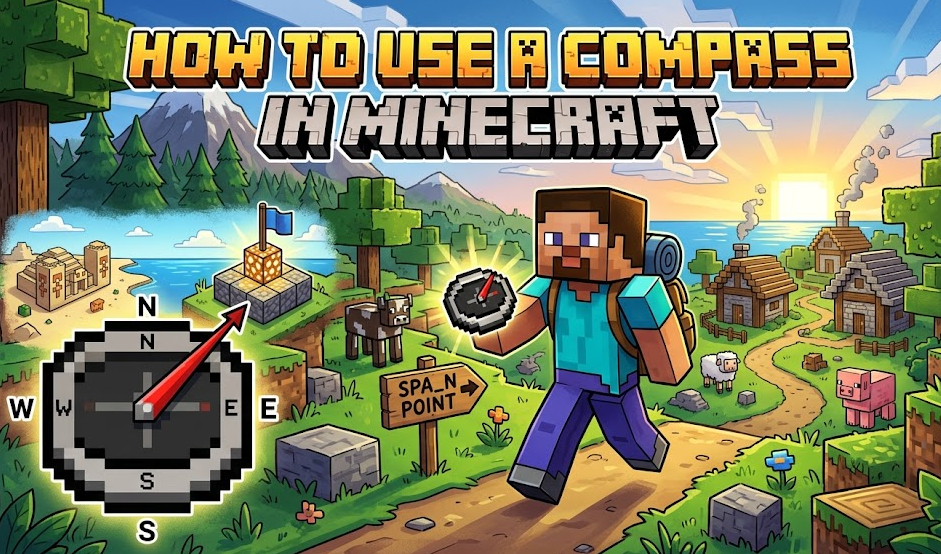
If you’re a gamer, you might be curious about how to use a compass in Minecraft.
In the game, a compass doesn’t point north like a real one. Instead, it always points toward your world spawn point. This means it’s incredibly useful for finding your way back home after exploring.
To use it, simply hold the compass in your hand. The needle will automatically point toward spawn. You can combine it with a lodestone to create a custom navigation point, allowing you to mark specific locations.
While it’s not realistic, it introduces the concept of directional tools in a fun and engaging way.
Common Mistakes When Using a Compass
Even though learning how to use a compass is straightforward, beginners often make avoidable mistakes.
One common issue is holding the compass at an angle. This can cause the needle to stick or give inaccurate readings. Always keep it flat.
Another mistake is ignoring magnetic interference. Metal objects, electronic devices, and even certain rocks can affect the needle. Keep your compass away from such items when taking readings.
Finally, many people forget to recheck their direction. Regularly verifying your bearing ensures you stay on track.
Practical Tips to Master Compass Skills
Mastering how to use a compass takes practice and patience.
Start in a familiar area where you can easily verify your direction. Gradually move to more challenging environments as your confidence grows.
Practice setting different bearings and walking in straight lines. Try navigating to specific landmarks using only your compass.
Combine compass skills with observation. Pay attention to natural cues like the position of the sun, wind patterns, and terrain features.
Over time, these habits will make navigation feel intuitive.
Conclusion
Learning how to use a compass is a timeless skill that offers both practical and educational benefits. From beginners taking their first steps in navigation to experienced adventurers refining their techniques, a compass remains a reliable and essential tool.
Whether you’re exploring the outdoors, teaching kids, or navigating virtual worlds like Minecraft, understanding compass use empowers you to move with confidence and purpose.
With consistent practice and attention to detail, you can master compass navigation and always find your way—no matter where life takes you.
FAQs
How accurate is a compas?
A compas is generally very accurate, but its precision can be affected by magnetic interference and user error.
Can I use a compas anywhere in the world?
Yes, but you may need to account for magnetic declination, which varies by location.
Is a compas better than GPS?
A compas doesn’t rely on batteries or signals, making it more reliable in certain situations, especially outdoors.
How long does it take to learn compas navigation?
Basic skills can be learned in a few hours, but mastery requires regular practice.
Do I still need a compas with a smartphone?
Yes. Smartphones can fail, but a compas is always dependable and serves as a critical backup tool.
For More UpdateS Visit: Accurate Unit Convert








Leave a Reply