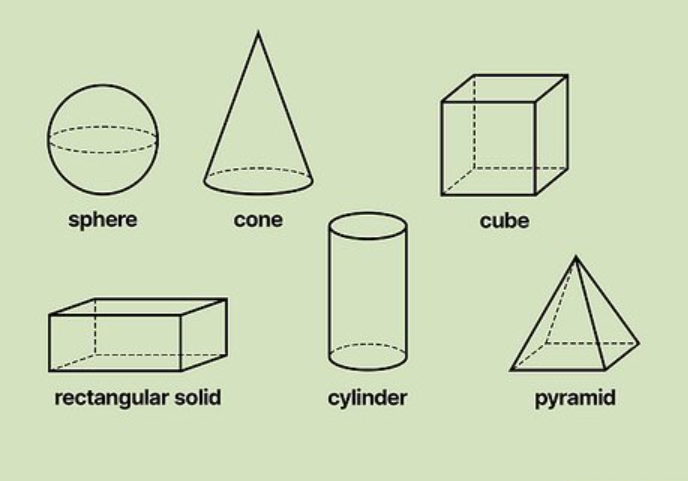
Learning how to find volume is an essential part of mathematics and geometry. Volume tells us how much space a three-dimensional object occupies. From simple classroom problems to real-life situations such as filling water tanks, measuring containers, or designing buildings, understanding volume plays an important role.
In geometry, volume represents the total space inside a solid object. Unlike area, which measures flat surfaces, volume measures three-dimensional capacity. This means that volume always includes length, width, and height. Because it involves three dimensions, volume is measured in cubic units, such as cubic centimeters (cm³), cubic meters (m³), or cubic inches (in³).
Many shapes exist in three-dimensional geometry. Each shape has its own formula to determine volume. Some of the most common shapes include cubes, cylinders, spheres, cones, pyramids, and prisms. By understanding the formulas for these shapes, students and professionals can easily calculate space and capacity.
This guide explains how to find volume in a simple and practical way. You will learn the formulas for different shapes, understand the meaning of each measurement, and see clear examples that make the concept easier to understand.
Understanding the Concept of Volume
Volume is a mathematical measurement used to determine the amount of space inside a three-dimensional object. This measurement is very important in mathematics, physics, engineering, architecture, and everyday life.
When we talk about volume, we are describing the capacity of an object. For example, a water bottle has a certain volume that determines how much liquid it can hold. Similarly, a room has a volume that describes how much air exists inside it.
Volume is always measured in cubic units because it combines three dimensions. If an object measures 1 meter long, 1 meter wide, and 1 meter high, its volume would be 1 cubic meter.
Volume calculations are used in many practical situations. Engineers use them when designing structures, scientists use them in experiments, and manufacturers rely on them to create products with precise measurements.
Another important aspect of volume is that different shapes require different formulas. A cube has a simple formula because all sides are equal. A cylinder uses the area of a circle multiplied by height. A sphere uses a completely different formula because of its curved surface.
Understanding volume is the first step toward solving many geometry problems. Once the concept becomes clear, applying formulas becomes much easier.
How to Find Volume of a Cube
A cube is one of the simplest shapes in three-dimensional geometry. All sides of a cube have equal length, and every face is a perfect square. Because of this symmetry, calculating the volume of a cube is straightforward.
V=a3
s
V=s3≈27.00s = 3
In this formula, a represents the length of one side of the cube. Since a cube has equal length, width, and height, multiplying the side by itself three times gives the total volume.
To understand this concept better, imagine stacking small cubes inside a larger cube. If each side of the cube measures 3 centimeters, then three small cubes fit along each edge. When these cubes fill the entire shape, there will be 27 smaller cubes inside. This means the cube’s volume is 27 cubic centimeters.
Cubes appear in many everyday objects. Dice, ice cubes, and certain storage boxes all follow the cube shape. Because the sides are equal, measuring only one side is enough to determine the volume.
The cube formula is also important because it introduces the concept of cubing a number. Cubing means multiplying a value by itself three times. This concept is widely used in mathematics and science.
Understanding cube volume also helps build a foundation for learning more complex shapes such as rectangular prisms and pyramids. Once you understand the cube formula, many other volume formulas become easier to learn.
Also Read:- How to Play Pickleball: Simple Beginner Guide
How to Find Volume of a Cylinder
A cylinder is a common three-dimensional shape with two circular bases connected by a curved surface. Many objects around us are cylindrical, including water bottles, pipes, cans, and storage tanks.
V=πr2h
r
h
Abase=πr2≈28.27
V=πr2h≈226.19r = 3.0h = 8.0
In this formula, r represents the radius of the circular base and h represents the height of the cylinder.
The formula works by first calculating the area of the circular base. The area of a circle is π multiplied by the square of the radius. Once the base area is known, it is multiplied by the height to determine the total volume.
For example, if a cylinder has a radius of 3 centimeters and a height of 10 centimeters, the calculation becomes π × 9 × 10. The result is approximately 282.6 cubic centimeters.
Cylinders are widely used in engineering and manufacturing. Fuel tanks, industrial pipes, and storage containers often use cylindrical shapes because they are strong and efficient.
Understanding cylinder volume is also important in everyday life. When buying a bottle of water or soda, the capacity listed on the label is based on the cylinder volume formula.
Learning this formula also helps students understand the connection between area and volume, since cylinder volume is essentially the area of a circle multiplied by height.
Also Read:- How to Lose Weight Fast on Metformin: Complete Guide for Safe and Effective Results
How to Find Volume of a Cone
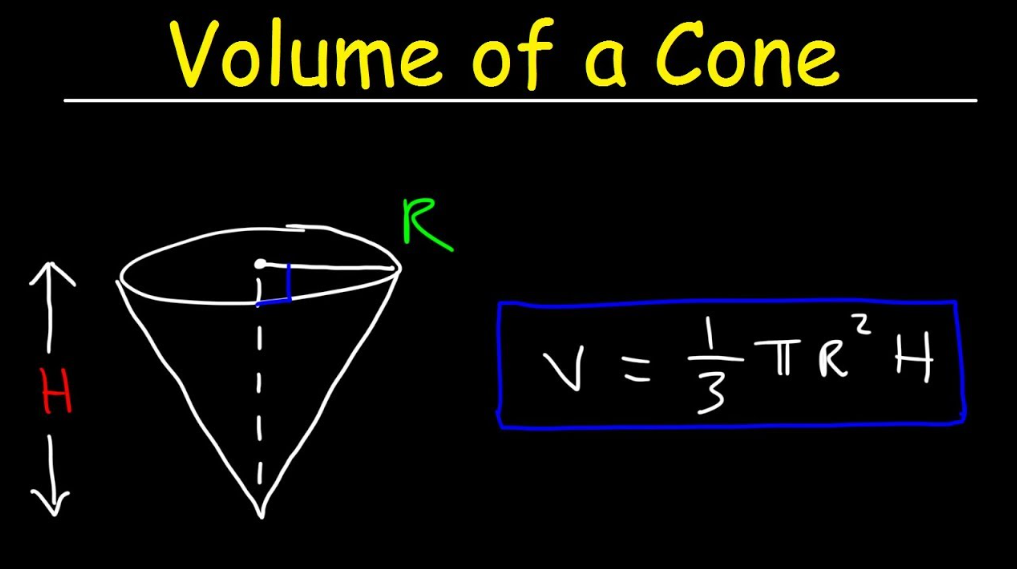
A cone is another interesting three-dimensional shape that has a circular base and a pointed top called the apex. Ice cream cones and funnels are common examples of this shape.
V=31πr2h
r
h
Abase=πr2≈28.27
V=31πr2h≈75.40r = 3.0h = 8.0
This formula shows that the volume of a cone is one-third of the volume of a cylinder with the same base and height.
The calculation begins by finding the area of the circular base using πr². After that, the result is multiplied by the height. Finally, the entire value is divided by three.
For instance, if a cone has a radius of 5 centimeters and a height of 12 centimeters, its volume can be calculated using the formula above. The result shows how much space exists inside the cone.
Cones appear frequently in everyday life. Traffic cones, party hats, and certain architectural designs all follow this geometric structure.
The cone formula also demonstrates how shapes are mathematically related. Since a cone shares the same base as a cylinder, its volume formula is closely connected to the cylinder formula.
Understanding cone volume is important in geometry because it introduces the concept of comparing volumes between related shapes.
Also Read:- How to Make a Paper Airplane (Complete Step-by-Step Guide)
How to Find Volume of a Rectangular Prism
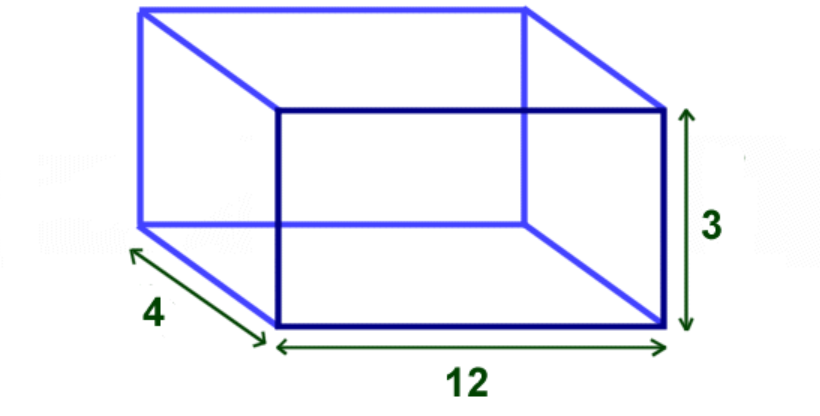
A rectangular prism is a box-shaped object with six rectangular faces. Many everyday objects such as books, bricks, shipping boxes, and rooms follow this shape.
V = l \times w \times h
In this formula, l represents length, w represents width, and h represents height.
To calculate the volume, these three measurements are multiplied together. This multiplication represents the three dimensions that create a solid object.
For example, if a box has a length of 8 centimeters, a width of 4 centimeters, and a height of 3 centimeters, the volume equals 96 cubic centimeters.
Rectangular prisms are extremely common in daily life. Storage containers, buildings, and packaging boxes often use this shape because it maximizes space.
Volume calculations for rectangular prisms are also used in logistics and shipping. Companies measure the volume of packages to determine transportation costs and storage requirements.
Because this shape is so common, the rectangular prism formula is one of the first volume formulas taught in school mathematics.
Also Read:- How to Delete Instagram Account (Complete Step-by-Step Guide 2025)
How to Find Volume of a Sphere
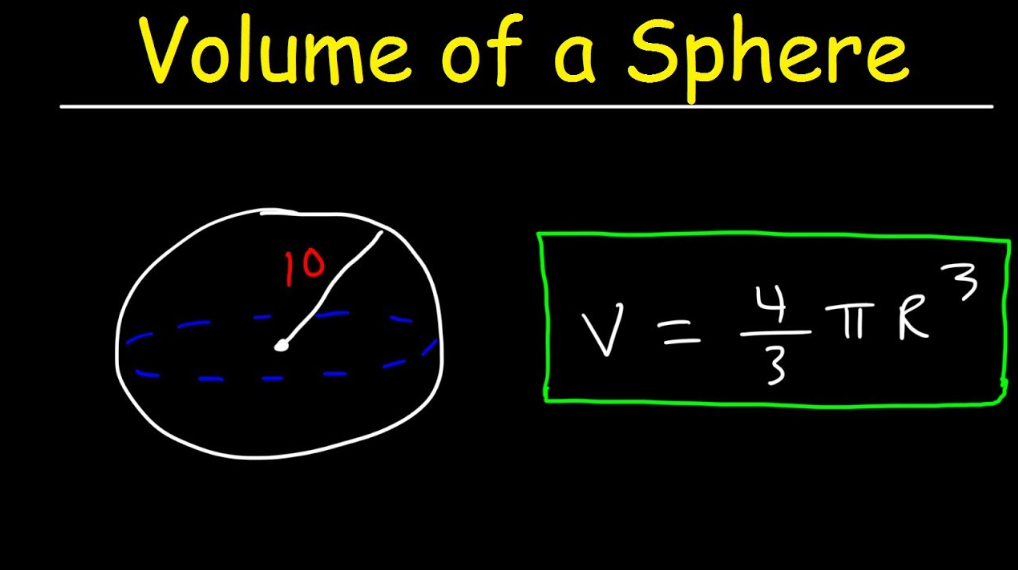
A sphere is a perfectly round three-dimensional object where every point on the surface is the same distance from the center. Examples include balls, planets, and bubbles.
V=34πr3
r
V=34πr3≈113.10r = 3.0
The only measurement needed to calculate sphere volume is the radius, which is the distance from the center of the sphere to its surface.
Because the radius is raised to the power of three, even small increases in radius produce large increases in volume.
For example, if the radius of a sphere is 3 centimeters, the volume becomes approximately 113.1 cubic centimeters.
Spheres appear frequently in nature and science. Planets, stars, and droplets of water often form spherical shapes due to natural physical forces.
The sphere volume formula is widely used in astronomy, physics, and engineering. Scientists use it to calculate the volume of planets, gas bubbles, and other spherical objects.
Understanding this formula helps students see how curved shapes can still be measured accurately using mathematical equations.
Also Read:- How to Change Reddit Username (Simple Guide 2025–2026)
How to Find Volume with Mass and Density
Sometimes objects do not have simple geometric shapes, which makes it difficult to calculate their volume directly. In such cases, volume can be determined using mass and density.
V = \frac{m}{\rho}
In this formula, m represents mass and ρ (rho) represents density.
Density describes how much matter exists in a given space. By dividing the mass of an object by its density, we can determine the volume.
For example, if an object has a mass of 200 grams and a density of 5 grams per cubic centimeter, the volume equals 40 cubic centimeters.
This method is especially useful in science and chemistry. Scientists often calculate the volume of irregular objects using density measurements.
The formula is also important in physics because it connects three important properties of matter: mass, density, and volume.
Learning this relationship helps students understand how different materials occupy space and how scientists measure substances accurately.
Also Read:- How to Make Sourdough Starter (Simple Beginner Guide)
Conclusion
Understanding how to find volume is an essential skill in mathematics and real-world problem solving. Volume calculations allow us to measure the capacity of containers, estimate materials for construction, and understand the space occupied by objects.
Different shapes require different formulas, but the basic principle remains the same. Volume always measures three-dimensional space, which includes length, width, and height. By learning the formulas for cubes, cylinders, cones, prisms, and spheres, anyone can solve volume problems with confidence.
Volume also plays an important role in science, engineering, and everyday life. From calculating the capacity of a water tank to measuring the size of a planet, volume helps us understand the physical world.
With practice and familiarity with formulas, finding volume becomes simple and intuitive.
Frequently Asked Questions (FAQs)
What is volume in mathematics?
Volume is the amount of three-dimensional space occupied by an object. It is measured in cubic units such as cubic meters or cubic centimeters.
Why is volume measured in cubic units?
Volume includes three dimensions—length, width, and height—so the units are cubed.
What is the easiest shape for calculating volume?
A cube is the easiest shape because all sides are equal and the formula only requires one measurement.
Can volume be calculated for irregular shapes?
Yes. Scientists often use density and mass formulas or water displacement methods to determine volume.
Why is learning volume important?
Volume calculations are used in many fields including construction, science, engineering, manufacturing, and everyday measurements.
For More UpdateS Visit: Accurate Unit Convert