

Oysters are considered one of the ocean’s most exquisite delicacies, celebrated for their briny flavor, delicate texture, and nutritional value. Knowing how to prepare oysters properly can elevate your culinary experience, whether you’re hosting a dinner party or enjoying a quiet night at home. This guide covers everything from shucking and serving oysters on the half shell to frying, baking, and eating them safely at home. By the end, you’ll gain expert-level insights, practical techniques, and actionable tips for creating memorable oyster dishes.
Oysters are rich in protein, omega-3 fatty acids, vitamins, and minerals such as zinc, making them both a gourmet indulgence and a healthful choice. Preparing oysters correctly is essential not just for taste but also for safety, as mishandling can lead to foodborne illnesses. This guide combines professional techniques, detailed step-by-step instructions, and tips to make oyster preparation approachable for everyone.
How to Prepare Oysters on the Half Shell
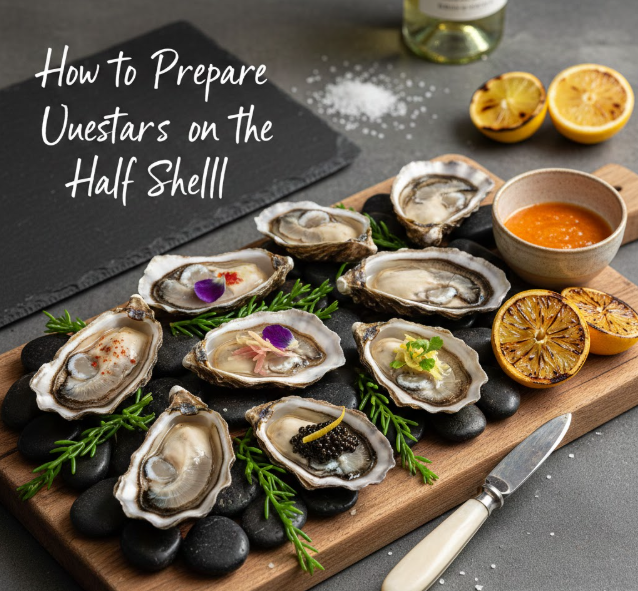
Definition: Preparing oysters on the half shell involves opening the oyster while leaving it in its bottom shell, retaining its natural juices, and presenting it for raw consumption. This classic method is popular in fine dining and oyster bars, emphasizing freshness and visual appeal.
. Select Fresh Oysters: Choosing fresh oysters is critical. Look for tightly closed shells, which indicate the oyster is alive. Fresh oysters have a clean ocean scent and should feel heavy for their size. Avoid any oysters with broken shells or a strong fishy odor. Purchasing oysters from reputable seafood markets ensures safety and quality.
. Clean the Shells: Rinse oysters under cold running water to remove sand, dirt, and debris. Use a stiff brush to scrub the outer shell. This step is important as shell fragments can fall into the oyster while shucking, affecting both presentation and safety.
. Shuck the Oyster Properly: Use an oyster knife and protective gloves. Insert the knife at the hinge, twist carefully, and slide the knife under the top shell to release the muscle. Precision prevents damaging the delicate meat inside.
. Retain the Oyster Liquor: The natural juice inside the oyster is called the liquor. When shucking, tilt the oyster to keep the liquor in the bottom shell. This liquor enhances flavor and is an indicator of freshness.
. Presentation Matters: Use half-shell oysters on a decorative platter for visual appeal. Garnish with herbs or edible flowers to elevate the dining experience. Presentation not only enhances taste perception but also makes a lasting impression on guests.
How to Prepare Oysters at Home
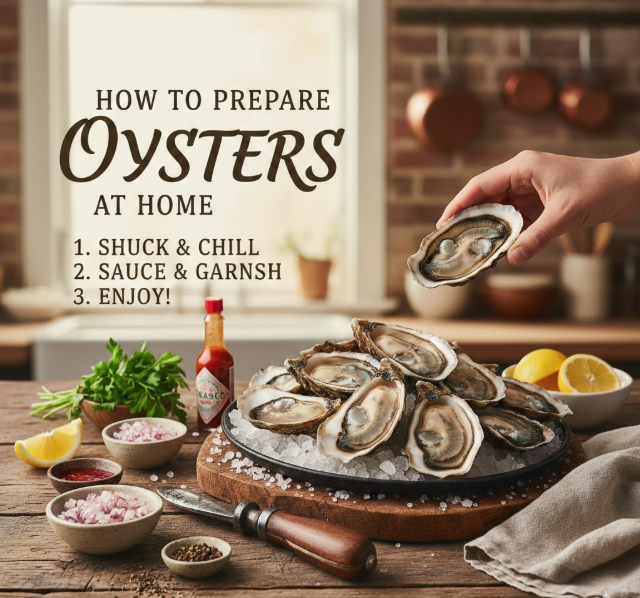
Definition: Preparing oysters at home involves cleaning, shucking, and cooking or serving them using methods suitable for domestic kitchens. Home preparation allows you to experiment with flavors, sauces, and cooking techniques while ensuring food safety.
. Buy Oysters from Reliable Sources: Choose oysters labeled with harvest date and origin. Reputable grocery stores or local seafood markets provide safer and higher-quality oysters compared to informal sources. The freshness of oysters directly impacts taste and health safety.
. Store Properly Before Preparation: Keep oysters cold in the refrigerator (ideally 35–40°F). Place them cup-side down on a tray covered with a damp cloth. Avoid submerging them in water, as it can kill the oysters and affect flavor.
. Shuck Safely: Use a short, sturdy oyster knife. Hold the oyster in a towel to protect your hand, insert the knife at the hinge, and twist gently. Home shucking requires patience to prevent injury and preserve the oyster meat.
. Experiment with Cooking Methods: At home, oysters can be enjoyed raw, grilled, baked, or fried. Each technique brings out a unique texture and flavor profile. Try garlic butter baked oysters or classic raw oysters on ice.
. Enhance Flavor with Garnishes: Use lemon, hot sauce, or herbed butter to complement oysters. Home preparation allows you to customize taste while keeping dishes visually appealing.
. Serve Safely: Ensure oysters are consumed the same day or stored properly if cooked. Avoid cross-contamination with raw seafood. Maintaining hygiene is crucial to enjoy oysters without health risks.
How to Prepare Oysters for Frying
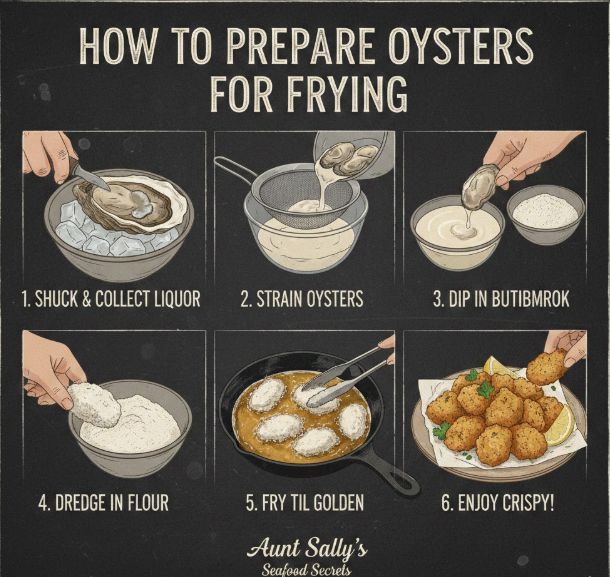
Definition: Frying oysters involves coating them in batter or breadcrumbs and cooking them in hot oil until golden brown. This method transforms the tender, briny oyster into a crispy, flavorful delicacy that pairs well with dips and sides.
. Choose Medium-Sized Oysters: Medium oysters are ideal for frying; too large can be tough, too small may overcook. Size affects cooking time and texture, ensuring a balanced bite of juicy interior and crunchy exterior.
. Drain Excess Liquor: Pat oysters dry using paper towels to remove moisture. Excess liquid prevents the batter from adhering, resulting in uneven cooking. A dry surface is key for crispiness.
. Prepare the Coating: Use seasoned flour, cornmeal, or breadcrumbs. Add spices like paprika, cayenne, or garlic powder for flavor. The coating forms a protective layer, preserving the tender oyster inside.
. Heat Oil to Proper Temperature: Preheat oil to 350–375°F. Proper oil temperature ensures quick, even frying and prevents greasy or soggy results. Use a thermometer for precision.
. Fry in Batches: Avoid overcrowding the pan, which lowers oil temperature and leads to uneven cooking. Frying in small batches guarantees a consistent golden crust.
. Serve Immediately: Serve fried oysters hot with tartar sauce, aioli, or spicy remoulade. Hot serving maintains crisp texture, while sauces complement the flavor and balance richness.
How to Prepare Oysters in the Shell
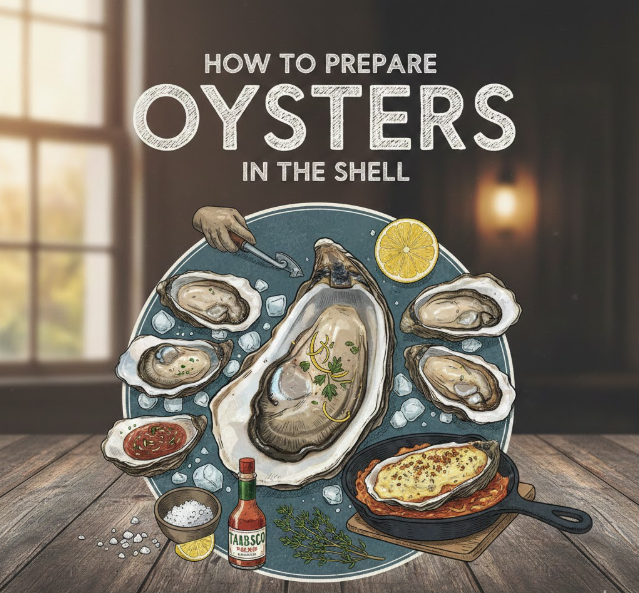
Definition: Preparing oysters in the shell involves cooking or serving oysters without removing them from their shell. This method preserves flavor, enhances presentation, and allows various cooking techniques like grilling, baking, or steaming.
. Select Clean, Intact Oysters: Only choose oysters with closed, unbroken shells. Cracked or open shells indicate poor quality or dead oysters. Shell integrity is essential for both safety and optimal cooking results.
. Rinse Thoroughly: Scrub shells under cold water to remove sand and debris. Clean shells reduce contamination and make handling safer.
. Choose a Cooking Method: Oysters in the shell can be grilled, baked, steamed, or roasted. Each technique locks in juices and enhances natural flavors. Grilling adds smokiness, while steaming keeps them tender.
. Prepare Seasonings: Add butter, garlic, herbs, or breadcrumbs on top of shell oysters. Seasonings elevate flavor without overpowering the delicate oyster taste.
. Cook with Precision: Maintain appropriate temperature and timing for chosen method. Overcooking toughens meat, while undercooking may pose food safety risks.
. Serve with Care: Present oysters on the shell using ice or hot platters, depending on cooking style. Ensure they are easy to handle and visually appealing for guests.
How to Prepare Oysters to Eat
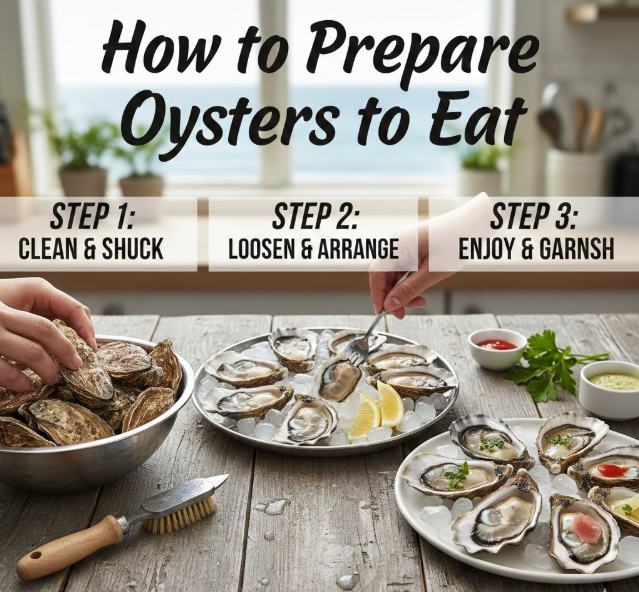
Definition: Preparing oysters to eat encompasses all methods of making oysters ready for consumption, whether raw, cooked, or served with sauces and accompaniments. The goal is to maximize flavor, texture, and safety for a delightful eating experience.
. Assess Freshness Before Eating: Always smell and inspect oysters. Fresh oysters have a mild ocean scent and firm texture. Discard any oysters with strong fishy odors or open shells that do not close when tapped.
. Shuck with Care: Shucking exposes the oyster meat while minimizing damage. Use an oyster knife and proper hand protection to avoid injury. Correct technique preserves flavor and appearance.
. Choose Serving Style: Decide if oysters will be served raw, cooked, or fried. Each preparation affects texture and taste, allowing versatility depending on occasion and preference.
. Enhance Taste with Accompaniments: Lemon, hot sauce, mignonette, or cocktail sauce complements oysters. Proper pairing enhances brininess and balances richness.
. Mind Food Safety: Serve raw oysters immediately or cook thoroughly to kill potential pathogens. Maintain cold chain for raw consumption to prevent illness.
. Enjoy Mindfully: Eat oysters in one bite to appreciate their full flavor. Chew gently to release natural juices, savoring the briny, buttery, and slightly sweet notes.
Conclusion
Mastering how to prepare oysters unlocks a world of culinary sophistication. From the elegance of oysters on the half shell to crispy fried variations, understanding proper handling, shucking, and serving ensures safety and exceptional taste. Freshness, preparation techniques, and creative accompaniments combine to create an unforgettable experience, whether at home or in a fine dining setting. By following these expert tips and techniques, anyone can enjoy oysters safely and deliciously.
FAQs
Q1: Can I eat oysters raw safely?
Yes, if fresh and sourced from reputable suppliers. Always check for tightly closed shells and a mild ocean scent.
Q2: How long can oysters be stored?
Keep oysters refrigerated at 35–40°F, ideally consumed within 24 hours. Avoid storing in water to preserve freshness.
Q3: What is the best way to serve oysters for beginners?
Oysters on the half shell with lemon or mignonette sauce is a simple and elegant way to start.
Q4: Can I freeze oysters?
Yes, shucked oysters can be frozen for 2–3 months, but freezing may slightly alter texture.
Q5: What is the difference between raw and cooked oysters?
Raw oysters have a delicate, briny flavor, while cooked methods (fried, grilled, baked) enhance texture and flavor complexity.
For More UpdateS Visit: Accurate Unit Convert














Leave a Reply