
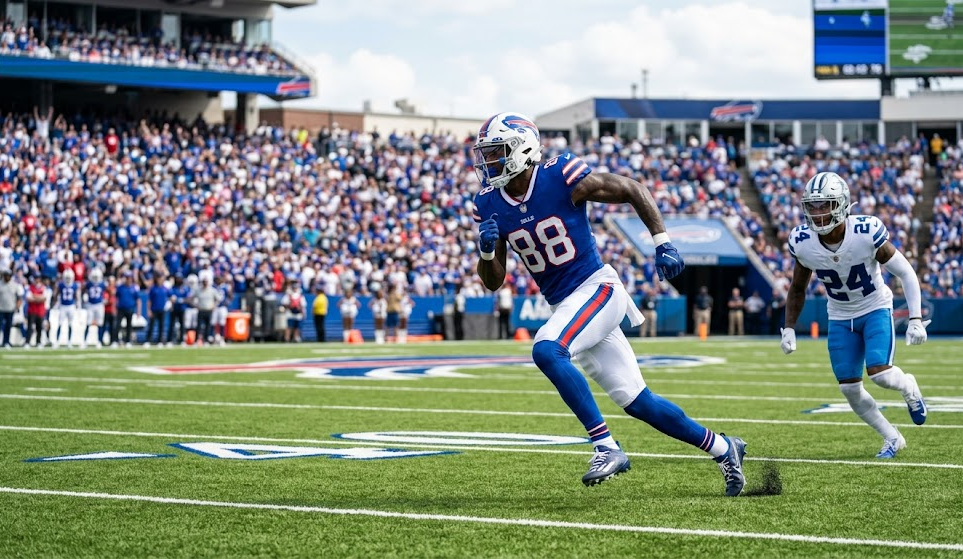
The post route is a vertical passing route where a receiver runs straight downfield before cutting diagonally toward the center of the field, aiming toward the goalposts. This route is designed to attack deep coverage and stretch safeties.
When executed properly, the post route forces the deep safety to make a decision: either stay centered or follow the receiver breaking inside. This hesitation creates space for other routes underneath.
The success of the post route depends on timing and precision. The quarterback must release the ball before the receiver makes the final cut, ensuring the pass arrives in stride. In the post dig route concept, this deep movement is crucial because it clears space for the dig route underneath.
Understanding the Dig Route in Passing Schemes
The dig route, also known as the “in route,” is an intermediate passing route where a receiver runs 10–15 yards downfield before making a sharp horizontal cut across the field.
This route is designed to attack the space between linebackers and safeties. Unlike vertical routes, the dig route operates in the intermediate zone, making it a key part of timing-based passing systems.
In a post dig route combination, the dig route becomes the primary read for the quarterback when the deep coverage is taken away by the post route. This creates a layered structure: deep threat + intermediate control.
How the Post Dig Route Combination Creates Separation
The real strength of the post dig route lies in how it manipulates defensive structure. When both routes are run together, they force defenders into conflict.
The post route pulls safeties deep and inward, while the dig route occupies linebackers and underneath zones. This creates a natural void in the middle of the field, which quarterbacks are trained to identify quickly.
This “high-low conflict” is one of the most important principles in modern offensive football. It allows offenses to attack both vertical and horizontal space in a single play design.
Quarterback Reads and Defensive Reactions
Quarterbacks executing a post dig route concept typically follow a progression read:
- Check deep safety movement (post route)
- Identify linebacker reaction (dig route)
- Look for open window in zone coverage
Defenses often struggle because they cannot defend both levels effectively without communication breakdowns. Zone defenses especially become vulnerable when safeties are forced to commit early.
Offensive Play Designs Using Post Dig Concepts
Offensive coordinators often design plays around the post dig route concept to create explosive plays. It is commonly paired with play-action or motion to further confuse defenders.
Key variations include:
- Post-dig with slot fade on opposite side
- Post-dig with flat route underneath
- Post-dig with crossing routes for additional misdirection
These variations increase unpredictability and make the concept harder to defend.
Real NFL Examples of Post Dig Route Concepts
Many NFL teams use the post dig route concept in their passing offense. It is especially popular in West Coast and spread systems, where timing and spacing are critical.
Teams like the Kansas City Chiefs and San Francisco 49ers frequently use layered route combinations similar to post-dig concepts to stretch defenses vertically and horizontally.
These concepts are often used on third downs or long-yardage situations where defensive breakdowns are more likely.
Coaching Tips to Execute the Route Successfully
To successfully run a post dig route, coaches emphasize:
- Precise timing between receivers
- Proper spacing to avoid route congestion
- Quarterback discipline in reading progression
- Receiver awareness of defensive leverage
Without timing and spacing, the concept breaks down quickly and becomes ineffective.
Common Mistakes and How to Avoid Them
Common errors in executing the post dig route include:
- Rushing the dig route break
- Poor depth on the post route
- QB locking onto one receiver too early
- Lack of spacing between routes
Coaches fix these issues through repetition, film study, and controlled practice drills.
Conclusion
The post dig route is one of the most effective passing concepts in modern football because it combines vertical stretching with intermediate control. By forcing defenders into difficult decisions, it creates natural openings in zone coverage and allows quarterbacks to exploit space efficiently. When executed correctly, it becomes a powerful tool in any offensive playbook.
FAQs
1. What is a post dig route in football?
It is a passing concept combining a deep post route and an intermediate dig route to stretch defenses.
2. Why is the post dig route effective?
It creates coverage conflicts by attacking both deep and intermediate zones simultaneously.
3. Which defenses does it work best against?
It is especially effective against zone defenses like Cover 2 and Cover 3.
4. What is the quarterback’s main read?
The QB reads deep safety first, then checks the dig route for an open window.
For More UpdateS Visit: Accurate Unit Convert













Leave a Reply