
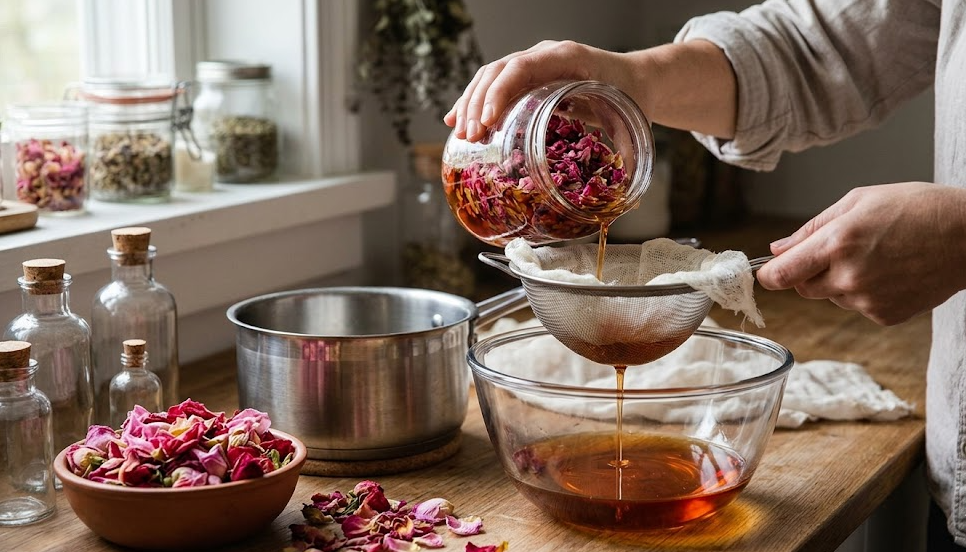
Rose oil is a fragrant oil created by infusing rose petals into a carrier oil or by steam distillation. The infused version is more common for homemade preparation because it requires fewer tools and ingredients. The oil captures the natural aroma and beneficial plant compounds from roses, making it useful for personal care and wellness routines.
Its popularity has increased because consumers are moving toward natural skincare products. Many beauty brands include rose oil in serums, moisturizers, and facial mists due to its gentle nature. In traditional wellness practices, rose oil has also been associated with relaxation and emotional balance. The floral scent provides a luxurious experience that appeals to people seeking both skincare and aromatherapy benefits.
| Feature | Details |
|---|---|
| Main Ingredient | Rose petals |
| Common Carrier Oils | Jojoba, almond, coconut |
| Main Uses | Skincare, haircare, massage |
| Shelf Life | 6–12 months |
| Preparation Time | 1–2 weeks |
Essential Ingredients Needed to Make Rose Oil
Before starting, gathering high-quality ingredients is important because the final result depends heavily on freshness and purity. Organic roses are recommended because they are less likely to contain pesticides or chemical sprays. Fresh petals produce the best fragrance, although dried petals can also work well when stored properly.
Carrier oils play an equally important role. Jojoba oil is often preferred because it absorbs well into the skin and has a mild scent that does not overpower the roses. Sweet almond oil is another popular option due to its moisturizing qualities. Coconut oil can also be used, especially for hair treatments, though it solidifies in cooler temperatures.
Basic Ingredients List
- Fresh organic rose petals
- Jojoba oil or almond oil
- Glass jar with lid
- Fine strainer or cheesecloth
- Dark glass bottle for storage
According to Healthline, proper dilution and clean preparation methods are essential for safe use on the skin.
Choosing the Best Roses for Homemade Oil
Not all roses provide the same fragrance or oil quality. Highly fragrant varieties such as damask roses are often considered ideal for oil preparation because they contain stronger aromatic compounds. Garden roses with little scent may not produce the same rich result.
The petals should be picked early in the morning when their natural oils are strongest. It is also important to ensure the petals are completely dry before mixing them with carrier oil because excess moisture can reduce shelf life and encourage spoilage. Many DIY experts recommend lightly crushing the petals to release more fragrance during infusion.
Using naturally grown flowers is strongly advised. Roses purchased from florists may contain preservatives or chemicals that are not suitable for skincare preparations.
Step-by-Step Guide on How to Make Rose Oil
The infusion method is the easiest process for beginners and does not require expensive equipment. It slowly transfers the fragrance and beneficial compounds from rose petals into the carrier oil.
Step 1: Prepare the Petals
Wash the rose petals gently and allow them to dry fully. Moisture can damage the oil over time, so drying is extremely important.
Step 2: Fill the Jar
Place the petals into a clean glass jar until it is about halfway full. Avoid packing them too tightly because the oil needs space to circulate.
Step 3: Add Carrier Oil
Pour your chosen carrier oil over the petals until they are fully covered. Seal the jar tightly with a lid.
Step 4: Infuse the Oil
Place the jar in a warm location with indirect sunlight for one to two weeks. Shake the jar gently every day to help the infusion process.
Step 5: Strain and Store
After the infusion period, strain the oil using cheesecloth or a fine mesh strainer. Transfer the finished oil into a dark glass bottle for long-term storage.
“Natural rose oil preparation depends on patience and quality ingredients rather than complicated equipment.”
Common Mistakes to Avoid During Preparation
One of the biggest mistakes beginners make is using wet petals. Even small amounts of moisture can shorten the lifespan of the oil and create an unpleasant smell. Dry petals thoroughly before beginning the process.
Another common issue is overheating the oil. Some people try to speed up the process with high heat, but excessive temperatures can destroy the delicate fragrance compounds found in roses. Gentle warmth is enough for infusion. Poor storage methods also reduce quality quickly. Keeping the oil in direct sunlight or plastic containers can affect freshness and aroma over time.
Benefits and Uses of Rose Oil
Rose oil is widely appreciated for both beauty and wellness applications. Many users apply it to dry skin because carrier oils help lock in moisture while the rose infusion adds a pleasant fragrance. It is also commonly used in scalp massages and hair treatments to improve softness and shine.
Aromatherapy is another major use. The floral scent is often associated with relaxation and emotional comfort. Some people add a few drops to bathwater, homemade creams, or massage blends. According to Medical News Today, rose oil is often included in wellness products designed to promote calmness and reduce stress.
How to Store Rose Oil Properly
Proper storage helps maintain the fragrance and quality of homemade rose oil. Dark amber or blue glass bottles are ideal because they protect the oil from sunlight exposure. The bottle should remain tightly sealed when not in use to prevent oxidation.
Store the oil in a cool, dry location away from direct heat. Refrigeration can also extend shelf life, especially in warmer climates. If the oil develops an unusual odor or cloudy appearance, it should not be used.
Conclusion
Understanding how to make rose oil at home can help users create a natural beauty product that is affordable, customizable, and easy to prepare. With fresh rose petals, a quality carrier oil, and proper storage methods, homemade rose oil can provide skincare, haircare, and aromatherapy benefits without relying on artificial additives.
The process is simple enough for beginners while still delivering luxurious results. By following safe preparation techniques and choosing quality ingredients, anyone can enjoy the calming fragrance and gentle properties of homemade rose oil.
FAQs
1. How long does homemade rose oil last?
Homemade rose oil usually lasts between 6 and 12 months if stored properly.
2. Which carrier oil is best for rose oil?
Jojoba oil and sweet almond oil are among the most recommended options.
3. Can dried rose petals be used?
Yes, dried petals work well as long as they are clean and fragrant.
4. Is homemade rose oil safe for skin?
Generally yes, but a patch test is recommended before full use.
For More UpdateS Visit: Accurate Unit Convert














Leave a Reply